Most parents know the feeling: a playroom full of toys and a child who says there's nothing to do.
There's a bit of research behind that. In a 2018 study at the University of Toledo, toddlers aged roughly 18 to 30 months were observed playing in a room with four toys and then in a room with sixteen. With fewer toys, the children tended to play with each one longer and in more varied ways. It was a small study, so it's a hint, not a rule. But it fits what many parents and educators see: too many choices can scatter a young child's attention.
Why fewer can work better
Young children are still building the ability to direct their own attention. A cluttered, stimulating environment makes that harder. When a few well-chosen things are in reach, a child is more likely to settle into one and explore it deeply.
How toy rotation works
- Choose a small set to keep out. A handful of things, not the whole collection. Aim for a mix: something to build, something to pretend with, something to move with, a few books.
- Store the rest out of sight. Closed bins or a high shelf work. Pictures or labels on bins help older toddlers find what they want.
- Swap every couple of weeks. Many families go for every two to four weeks. Bring back a toy your child hasn't seen in a while and it often feels new.
- Watch, don't schedule. If a toy is getting loved, leave it out. Rotate what's being ignored.
The shelf matters too
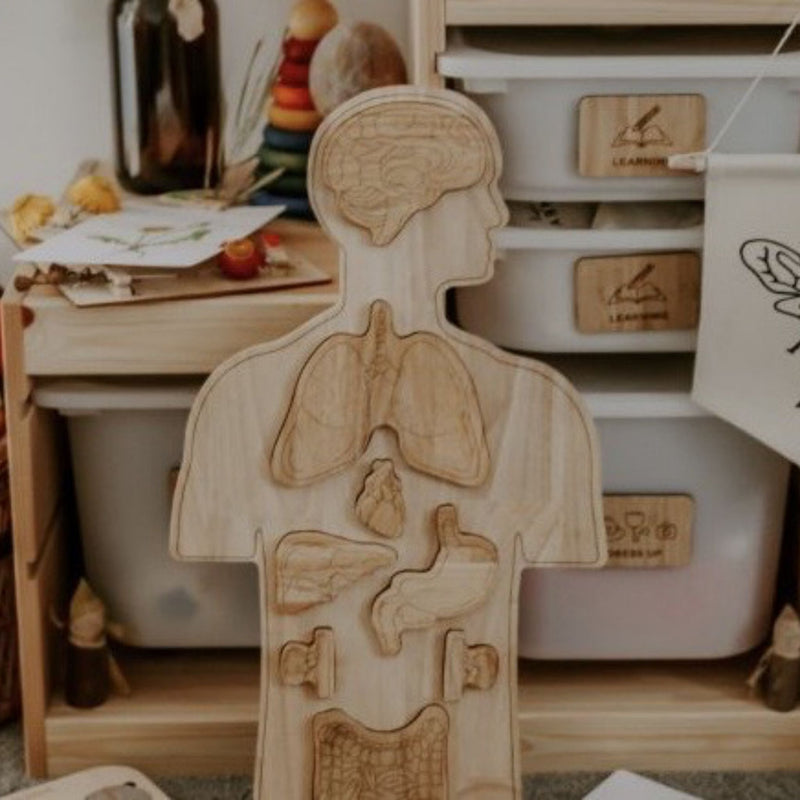
Low, open shelving lets a child see and reach what's available and put things back themselves. Display toys with room around them, like a small shop window, instead of piling them into one big bin.
A word about gifts
It's fine to say yes to grandparents' gifts. Rotation makes space for them. If you'd rather steer toward fewer, longer-lasting things, a short wishlist of open-ended items helps relatives pick well.
[Modular shelving] · [Toy storage] · [Open-ended toys]
Sources: Dauch C., Imwalle M., Ocasio B., Metz A.E., "The influence of the number of toys in the environment on toddlers' play," Infant Behavior and Development, 2018.