Your two-year-old sits beside another toddler at the sandbox. Each of them is busy digging, and neither says a word to the other. Is something wrong?
No. That is parallel play, and it is a normal and useful stage.
Where the stages come from
The most cited framework comes from sociologist Mildred Parten, who in the 1930s observed preschoolers and described how their play with others changes. She named six types, and they are still taught in child development courses today:
- Unoccupied play. Mostly infants. Random movements, watching whatever catches their eye.
- Solitary play. Playing alone, absorbed in their own activity. Common in the first two years.
- Onlooker play. Watching other children play without joining in. Often seen around ages 2 to 3.
- Parallel play. Playing next to others, with similar toys, but without much interaction. Typically appears in the toddler years, around 2 to 3.
- Associative play. Children share materials and talk, but each still follows their own idea. Often seen around 3 to 4.
- Cooperative play. A shared goal and shared roles: "You be the doctor, I'll be the patient." Typically settles in around 4 and up.
Important caveats
The ages above are approximate, and the stages aren't a ladder children climb and leave behind. Later research found that older children still choose solitary and parallel play, and that the quality of what they're doing matters more than the social label. A five-year-old building alone with intense focus isn't "behind." A child's temperament, language skills, and experience with other kids all shape the path.
This is general information about typical development, not an assessment. If you have concerns about your child's social development or communication, your pediatrician is the right person to ask.
What helps at each stage
Under 2: Safe floor space and a few simple objects to explore alone. Your presence is the most important "toy."
2 to 3: Duplicates. Two sets of the same blocks or two small buckets reduce conflict during parallel play. Playdates can be short and side by side.
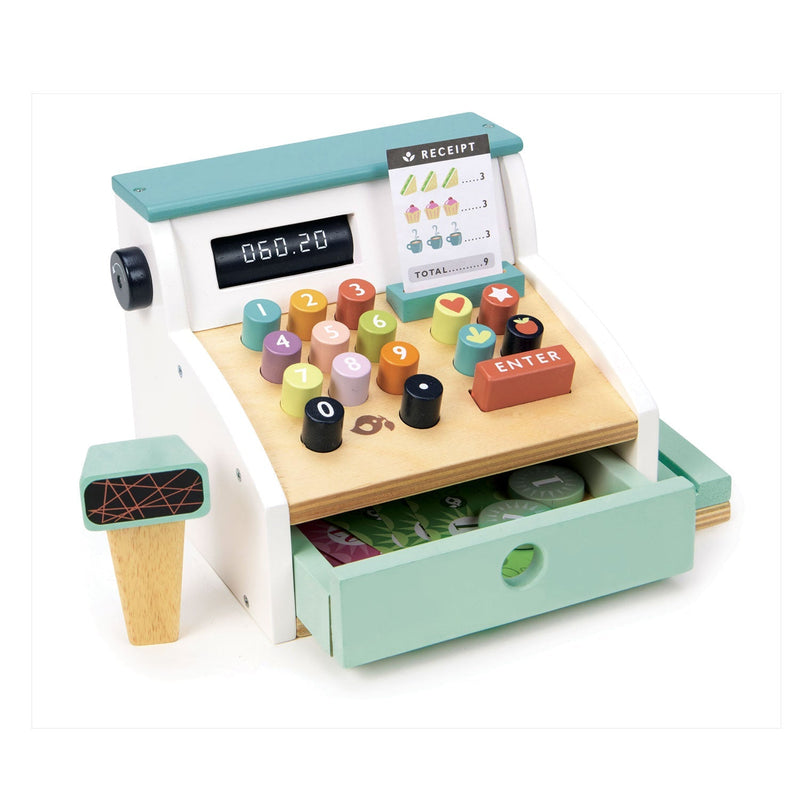
3 to 4: Toys that invite sharing and simple rules: a big floor puzzle, a play market, easy board games with few players.
4 and up: Role-play settings, building sets large enough for several children, and games where they negotiate rules.
[Shop by age: 2 to 3 years] · [Pretend play collection]
Sources: Parten M., "Social participation among preschool children," Journal of Abnormal and Social Psychology, 1932. Yogman M. et al., Pediatrics, 2018.